Measure Each Display, Not Just Each Donation
Start a list with one row per auction lot. Give every lot a stable number, then record the space needed for its displayed items, description card and bidding instructions. A framed certificate and a large gift basket do not use the same tabletop space. A group of items offered as one lot should be planned together.
Place a representative display on a surface at home or in your planning space. Include its sign and any paper bid sheet. Leave room for someone to write without leaning on the display. If bidding is on a phone, keep the instructions readable and the item number easy to match.
Identify unusually heavy, fragile or tall pieces before selecting tables. Ask about the suitability of the specific rental table; do not assume a standard table can support every donated item. Oversized pieces may need a separate display arrangement approved by the organizer and venue.
Choose Table Lengths Around the Actual Displays
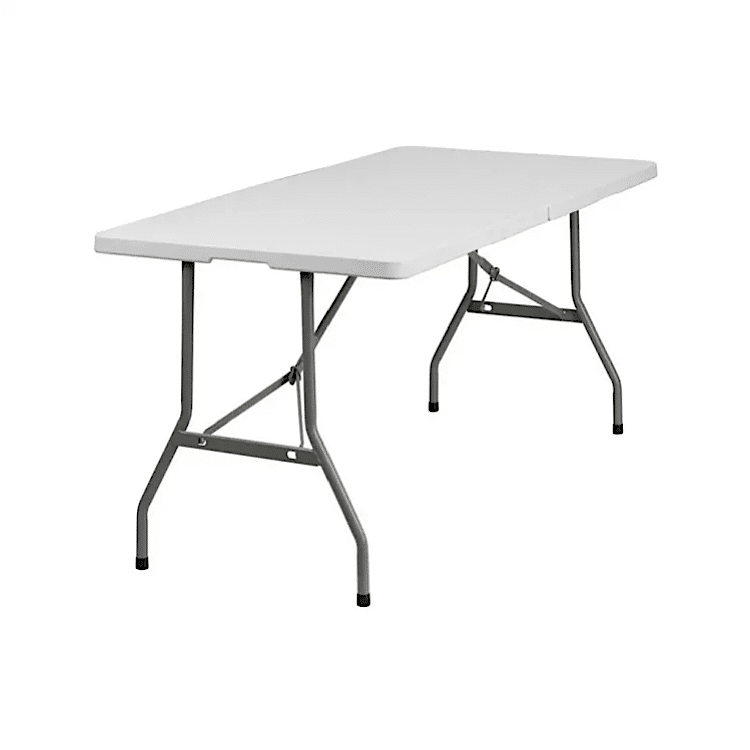
Compare the six-foot rectangular table and eight-foot rectangular table using the usable display length you have measured. Longer tables can keep related lots together, while shorter tables can help divide groups in a room with more doorways or fixed obstacles.
For an illustrative planning check, three displays that each use 24 inches consume all 72 inches of a six-foot table’s length. That leaves no extra length between them. It is a signal to test spacing or use another table, not proof that the arrangement is ready for guests. Check depth, signs and writing space separately.
Keep displays from straddling table joins. A small gap or a shift between two tables can affect an item or sign resting across both. Our long table-row planning guide explains the practical limits of treating several tables as one continuous surface.
Separate Browsing From the Collection Queue
Sketch where guests enter the display area and how they move past the lots. Tables against a wall create a different browsing pattern from tables viewed on both sides. If guests can approach from two directions, decide which side holds the description and bidding position so people are not reaching through another display.
Choose a separate location for questions and for item collection after bidding closes. Mark a place for people to wait that does not block the auction displays or required access routes. Have the venue review the circulation plan rather than relying on a generic aisle-width rule.
If the same table will switch jobs during the event, name the person responsible for clearing it and moving the supplies. A table still holding auction lots cannot also function as an empty handoff counter at the same time.
Give Every Rental Table a Job
Swipe the comparison table to see every column.
| Table group | Put on the plan | Confirm before ordering |
|---|---|---|
| Display tables | Numbered lots, descriptions and bidding space | Individual footprints, stability and suitability of the selected tables. |
| Organizer table | Volunteer supplies and guest questions | Whether volunteers need chairs and a separate work area. |
| Collection table | A place to match and hand over items | Space for the team and a waiting area approved by the venue. |
| Refreshment tables | Any drinks or food offered during the event | A separate footprint so refreshments do not crowd the auction items. |
This is a list of possible jobs, not a requirement to rent four separate groups. Use only the stations your event needs. If refreshments are part of the plan, refer to the serving-table checklist and keep that order count separate from auction displays.
Use Linens Without Hiding the Practical Details
Choose rental linens after deciding the table sizes and arrangement. Keep lot numbers and instructions visible against the linen color, and avoid loose fabric in writing areas or walking routes. Ask before attaching signs, tape or decorations to any rental item.
Prepare a placement list such as “Display A: lots 1–4” rather than telling volunteers to fill whatever space is open. Keep the list with the room sketch. When a late donation arrives, update the plan before adding it to a table that is already full.
Before doors open, walk the display as a guest: identify the lot, read its description, find the bidding instructions and step away. Then repeat the walk as a volunteer collecting that item. The two paths reveal different problems.
Request the Furniture You Need to Run the Event
Send CFER the event date and address, your measured display list, the venue’s access instructions and a count of tables by job. Include any chairs for volunteers and the linen sizes you want. Tell us about stairs, unloading restrictions and the time the room becomes available.
For fundraisers and benefit events in Mount Dora, Eustis, Tavares, Apopka, Leesburg and Clermont, we can review the requested rentals and availability with your quote. Your event team remains responsible for auction administration, bids, payment handling and matching items to recipients.
Request a table rental quote with your draft auction plan. Finalize the equipment list after the display and collection arrangements are confirmed, so the order reflects how your event will actually work.