
Give every provider the same brief
Start with one version of the event details: date, venue address, guest count, rental period and equipment list. Add the time the venue allows access and any stairs, long carries or restricted loading areas. Comparing a pickup estimate with a delivered order will not tell you which provider offers the better fit for the same job.
If your plan changes, update every quote you are still considering. Label the revision with its date and keep the previous version separately. A missing item may reflect an older request rather than a pricing mistake.
Match the equipment before comparing the subtotal
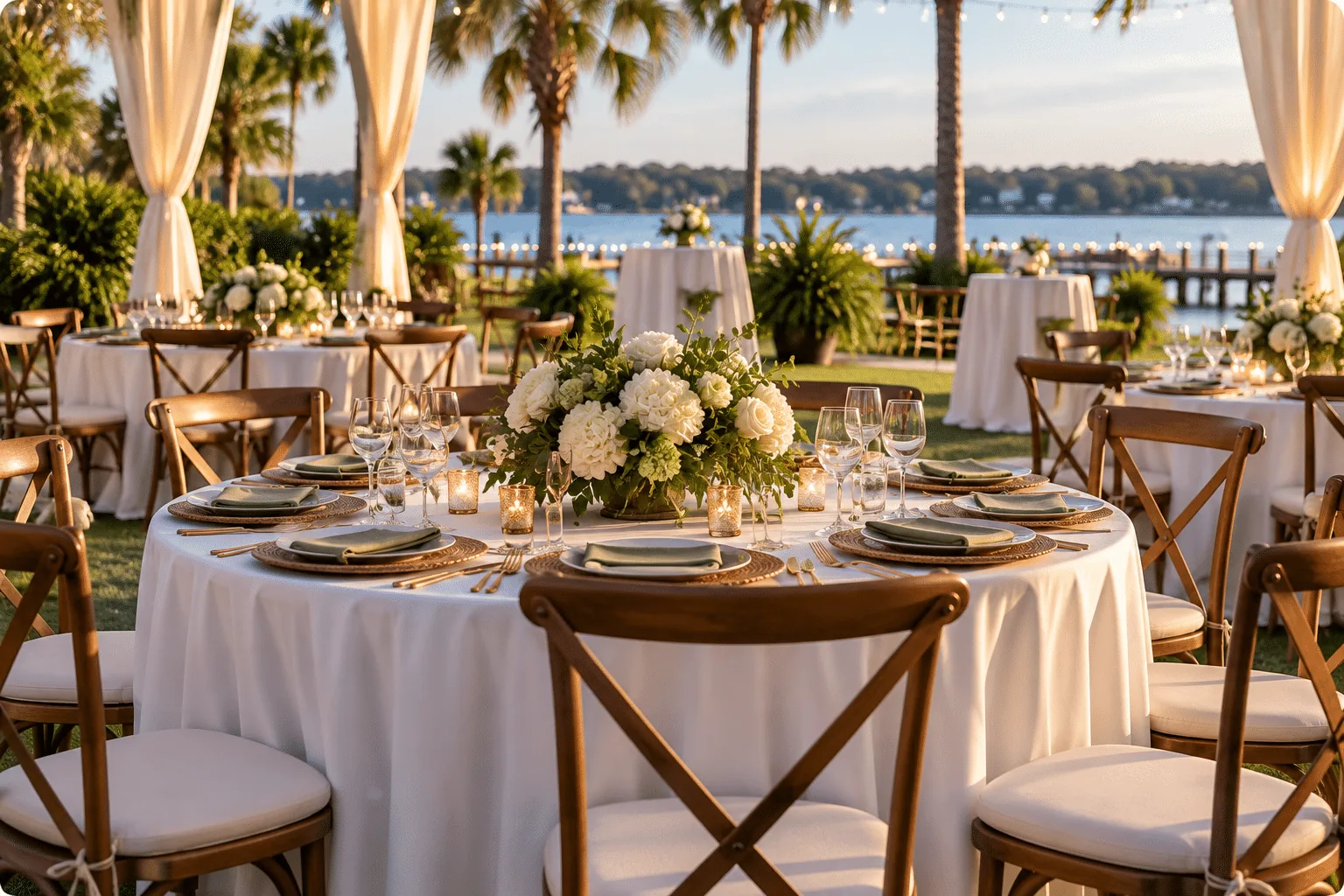
Check model, size and quantity on each line. A plastic folding chair and a padded resin chair are different choices; a 6-foot table and an 8-foot table provide different surfaces. Photos help, but the written description should identify what you will receive. Use the chair comparison and rectangular table comparison if the options are unfamiliar.
Keep a short “must match” list: chair style, table dimensions, linen size and color, and any selected accessories. Mark substitutions as questions until you agree to them. Do not assume that a lower total includes the same equipment when the item descriptions differ.
Separate delivery from hands-on setup
Ask what happens when the truck arrives. Delivery to an agreed location, placement around a floor plan, linen dressing, furniture moves during the event and removal afterward are different tasks. Confirm the tasks included in each written quote and identify who handles the remaining work.
For CFER, dance-floor setup and removal are included, while delivery is charged separately. That specific inclusion should not be applied to every other item. Read the selected product details and the quote for the table, chair, tent or accessory services you need.
Use a simple comparison worksheet
Swipe the table to see every column.
| Line to compare | What to record |
|---|---|
| Equipment | Exact models, dimensions, quantities and accessories. |
| Rental period | Dates and agreed pickup or delivery and return arrangements. |
| Transport | Delivery and collection charges, or approved customer pickup. |
| Labor | Placement, installation, breakdown and any requested moves. |
| Other charges | Applicable taxes and any fees shown in the quote. |
| Booking terms | Required payment, deadlines and the actual agreement’s change or cancellation terms. |
If a line is blank, ask about it. Do not turn an unanswered question into an assumed inclusion or a zero-dollar charge.
Evaluate an example without getting distracted by price
Imagine one quote includes 60 chairs delivered to the venue, while another includes 60 chairs placed in ceremony rows and collected afterward. Before choosing, ask whether both include transport in each direction, whether the same chair model is listed and who handles setup in the first option. Only then do the totals describe a comparable choice.
The same rule applies to linens: a table rental may not include its cover. If you need covers for dining tables, a buffet and a welcome table, count each role separately and review the linen order checklist. This example illustrates a comparison method, not a quoted price or a promised package.
Confirm one final version before booking
Ask for a revised written quote after the open questions are resolved. Confirm the event date, selected items, quantities, address, services and payment requirements on that version. Read the agreement for its actual cancellation and change terms rather than relying on a general planning article.
For a CFER event in Mount Dora, Eustis, Tavares, Apopka, Leesburg or Clermont, request a quote using your complete list. A quote request does not reserve equipment; the team confirms availability and the required contract and payment. If two quote versions exist, identify which one you want to proceed with so everyone is working from the same plan.