
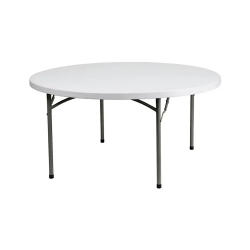
Start with the one-foot difference
A 48-inch round top is four feet across. A 60-inch round top is five feet across. Both are standard-height dining tables in the CFER catalog; the taller cocktail table is a different product and needs its own layout.
The larger round table adds six inches from the center to the edge in every direction. Its tabletop area is approximately 19.6 square feet, compared with 12.6 square feet for the smaller table. That is about 56% more tabletop surface, calculated from the diameters. It does not mean 56% more guests will fit comfortably.
Compare a complete place setting
Before choosing a diameter, consider what each guest will have in front of them. A plate, glasses, utensils and a favor take up space together. Shared serving dishes and a centerpiece use the middle of the table. Sketch or arrange one representative place setting, then think about the whole group.
A smaller table may suit a compact conversation group or a dedicated display. A larger table offers more surface for a dining arrangement. Neither is automatically the right choice for every room. Confirm the intended number of seats using the actual chair and place settings rather than assuming a universal capacity.
Allow for chairs and movement
The diameter describes the tabletop, not the complete space required. People need room to pull out chairs and move between tables. A five-foot top cannot be treated as a five-foot-wide occupied dining area.
Draw the tables in the usable part of your room, then add chairs, entrances and service routes. Check the narrowest route after chairs are in use. Have the venue review its access and occupancy requirements. The round-versus-rectangular guide can help if neither round size suits your layout.
The same linen creates a different drop
For a round table, the drop is half the difference between the linen diameter and tabletop diameter. At the standard 30-inch table height, these are the current matching choices:
| Table | Linen | Drop |
|---|---|---|
| 48-inch round | 90-inch round | 21 inches; legs visible |
| 48-inch round | 108-inch round | 30 inches; floor length |
| 60-inch round | 90-inch round | 15 inches; shorter coverage |
| 60-inch round | 108-inch round | 24 inches; longer coverage |
| 60-inch round | 120-inch round | 30 inches; floor length |
Notice that the 108-inch linen reaches the floor on the smaller table but stops above it on the larger table. Order by table size and desired drop, not by the linen name alone.
Mix sizes without mixing up the order
You can use different table sizes for different roles. Keep a simple list: table model, quantity, purpose, linen size and color. Two 48-inch display tables and four 60-inch dining tables need six separately assigned coverings if you want every table covered.
On the product pages, tables and linens are separate cart additions. No linen size is chosen for you. If you want different colors or drops, add each linen selection in its own quantity, then review the complete cart. The linen order checklist explains how to reconcile a mixed order.
Choose your tables, then confirm your date
Compare the plastic 48-inch round table with the plastic 60-inch round table. Review setup options, chair quantities and eligible pickup or delivery in your quote.
Planning in Mount Dora, Eustis, Tavares, Apopka, Leesburg or Clermont? Send CFER your date, location and table plan. Request a quote to confirm the equipment and arrangements for your event.